
Water testing
Total Ammonia Nitrogen (NH3/NH4+) to PPM
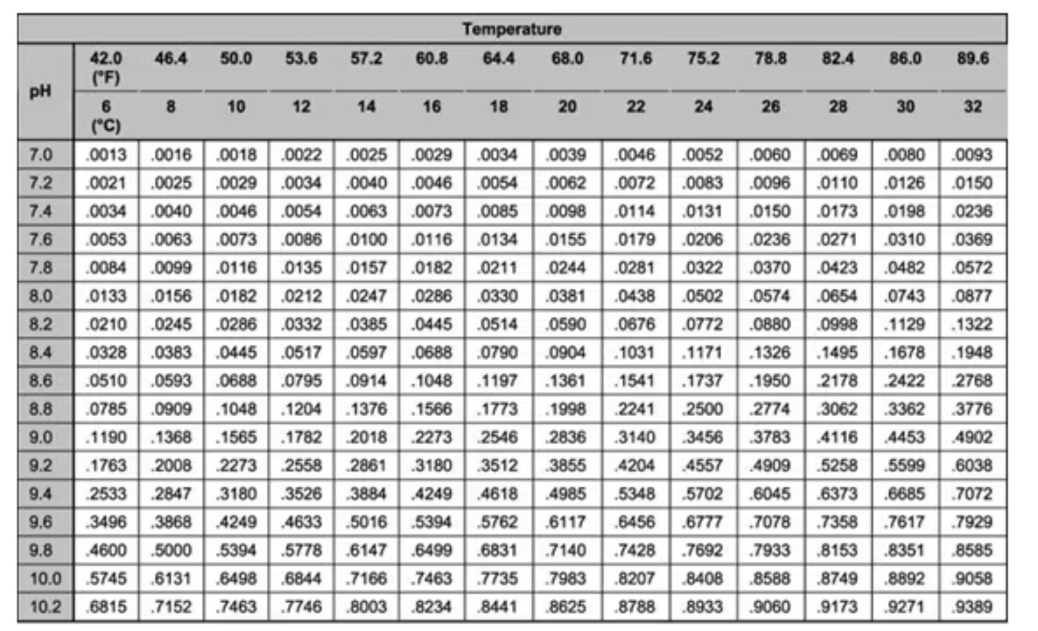
Drop test result * 0.0131 @ 24C, 7.4PH = unionized ammonia.
Dangerous level for fish is 0.05.
Nitrogen Cycle
- Ammonia (NH₃): Fish produce waste, and uneaten food decays. Both of these create toxic ammonia.
- Nitrite (NO₂): A first type of beneficial bacteria consumes this ammonia and converts it into nitrite. This is where your problem starts. While it’s a necessary step, nitrite is extremely toxic to fish.
- Nitrate (NO₃): A second type of beneficial bacteria then consumes the nitrite and converts it into nitrate. Nitrate is far less harmful and is managed with regular water changes and live plants.
Ammonia (NH₃) and Nitrite (NO₂) are toxic to fish!
Nitrite poisoning is often called “Brown Blood Disease.” It gets this name because nitrite enters a fish’s bloodstream and interferes with hemoglobin, the part of the blood that carries oxygen. It essentially turns their blood a brownish color and prevents it from transporting oxygen effectively.
Even if there’s plenty of oxygen in the water, a fish suffering from nitrite poisoning is slowly suffocating from the inside. This is why you might see them gasping at the surface, breathing rapidly, or acting very weak. Any level of nitrite above 0 ppm (parts per million) is stressful and potentially lethal.